

This review helps you choose the most convenient Bitcoin wallet. Our guide has compiled the best crypto wallets for beginners and advanced users. Readers will also learn how different types of wallets work and how coin security works.
What is a cryptocurrency wallet?
Wallets for Bitcoin are digital systems for storing tokens – individual software stores chains of transfers. A device or program can have open or closed code. If the user compares both alternatives, then the safer option is to store your crypto in an open-source wallet.
Holders of the easy private wallet can buy Bitcoin worldwide and send cryptocurrencies to other users. In your account, you can check the balance of currencies.
It is not necessary to use it only for Bitcoin storage. Your cryptocurrency may be an altcoin, including popular Litecoin. For these purposes, create a multi-wallet.
How do crypto wallets work?
The system stores the user’s private keys. At any time, you can buy or sell currency, control the balance. All operations are written to the blockchain algorithm, so it is impossible to fake data.
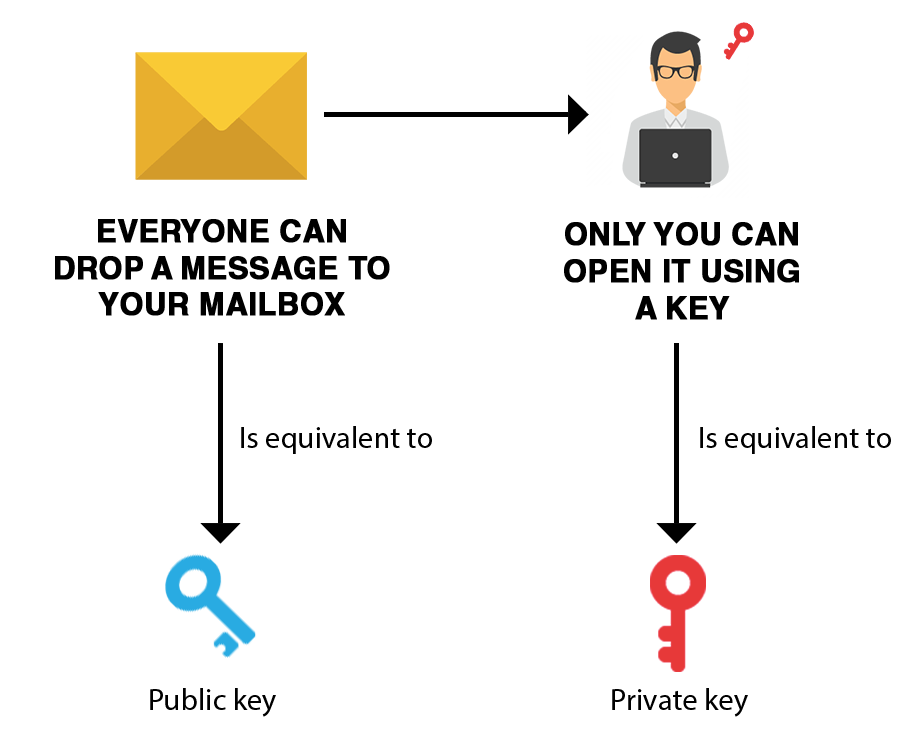
A private key is a sequence of numbers and letters and is part of any cryptocurrency. When working with a digital wallet, its owner receives a public address and a private key for token transactions.
BITCOIN PRIVATE KEY EXAMPLE:
5KVRXY3ZMQX8MWPXHLRZUVGKBMYLTIEGRUHJZMBTGPEJDBQBFC7
The available money is situated at the public address; however, it cannot be used without a special private key. The public address can be generated.
BITCOIN PUBLIC KEY EXAMPLE:
1CuzgGMPNLuCd3AWpG53H2qnFaDANq1z5X
When making a transaction, entering the private key is the equivalent of a digital signature or password. It is not possible to cancel a transaction. If the private key is lost, then access to the coins will also be lost forever.
Initially, when buying your Bitcoin, you can pay cash.
Finding the appropriate space for your crypto needs is one of the most important things to consider. There are numerous exchanges where you can buy Bitcoin and numerous wallets to keep it. Make sure to check the features that are most valuable to you.
To learn more about Blockchain check our What Is Blockchain Review
Types of cryptocurrency wallets
Before choosing the best wallet, you need to study their types. Wallets differ in how they store your funds. There are several main categories of Bitcoin wallets:
- A special hardware device looks like a flash card or credit card. Some of them connect to the computer via USB. This type of wallet is considered the safest. Hardware wallets are usually compatible with different interfaces and, in 80% of cases, support many currencies.
- Wallet software is a computer program with the functions of input, output, and exchange of coins. They are divided into three kinds:
- Stationary wallets (installed on a PC; if there are no viruses, this is one of the most secure wallets).
- Online wallets (they are particular services that may be hacked). Mobile wallets (this is not the most powerful option, but they can be used not only on the market for Bitcoin but in a regular store).
- Apps do not require complicated settings. It is enough to download them to your phone. At the same time, BTC or altcoins are offline, so they cannot be stolen without knowing the password.
- The most trustworthy wallets are offline wallets, which are paper cards with your private keys. Compared with other options, this is the most comfortable wallet. It does not require any setup. To exchange or spend currency, you need to transfer it again to a hardware wallet or online wallet. You don’t need any special operations; manually enter the key on the wallet address or scan it.
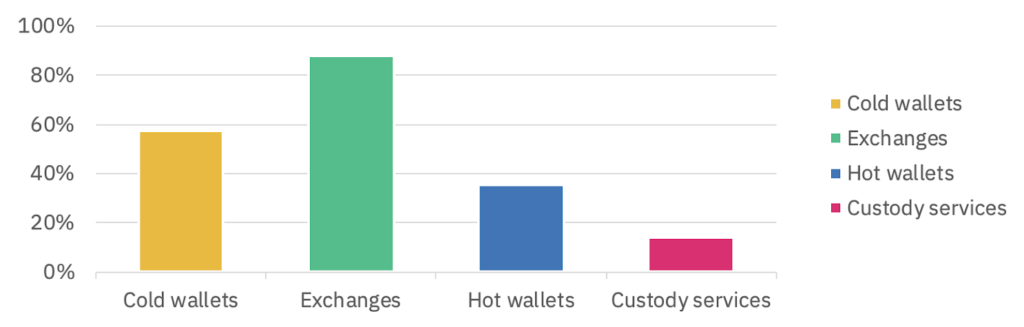
Hot wallets
According to reviews, most often users choose a hot wallet. It could be a mobile wallet or desktop wallet, or 3rd party service. A common requirement is the need to connect to the Internet. These programs provide access to your money through any operating system, such as Windows and Linux or iOS and Android.
Cold wallets
A cold storage wallet is the most secure wallet. Such devices work autonomously and are not connected to the Internet, so they cannot be hacked remotely. It is permissible to store any number of coins on cold wallets, but they cannot be exchanged. The currency must be transferred to the hot wallet to complete the transaction. Wallet stores offer equipment of various brands with varying degrees of reliability and price.
If you want invest in crypto and HODL for years – use only cold hardware wallets or multiply paper parts of private key on different bank cells
Hosted wallets – Custodial Wallets
It is the easiest but dangerous way to store cryptocurrency. The client trusts their money to a third party but does not receive any insurance, as with a bank. The server can be hacked remotely or by the organizers themselves. Private keys provide wallet security. If such a key is known not only to the owner of the funds but also to a third party, then there are already two owners.
Decentralized wallets – Non-Custodial Wallets
This option does not mean that the wallet or app can not be hacked. But the private key is stored only with the account holder, so all responsibility for the money (not to forget and not lose the password) lies with him.
Best Bitcoin Wallets
Wallet stores offer different models of devices and programs. Easy wallets have less functionality and are less secure. Other models require installation and updates according to instructions. Before we get into the current lineup, here’s the short version of what changed since this article was first written: BRD, Jaxx Liberty, and Armory are dead – shut down for good between 2022 and 2023 – and several other wallets moved on to new hardware generations. If you’re still holding funds on any of the discontinued wallets below, migrate them now using your recovery phrase.
Hardware Bitcoin Wallets
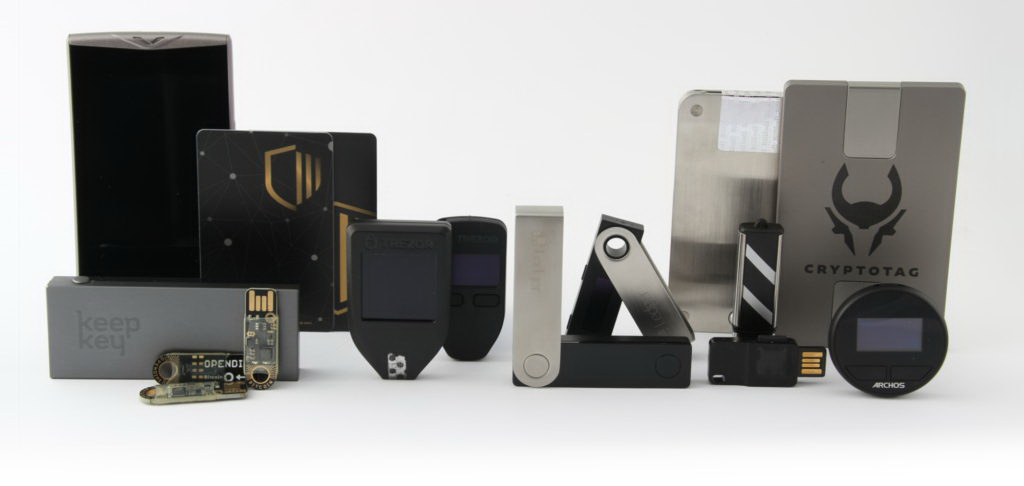
Such devices safely store electronic currency. To conduct operations, you must connect them to a computer and use a particular program or online service. Below are the simplest and most reliable options based on customer reviews.
Ledger
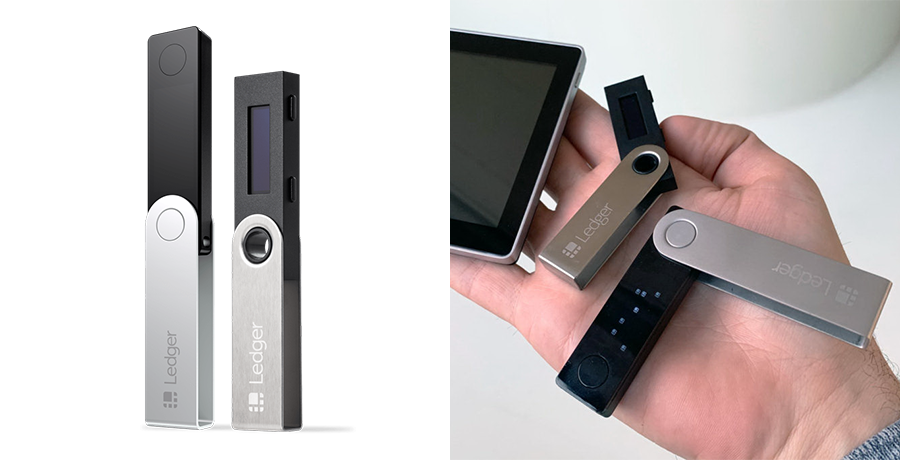
The first Ledger Nano S is no longer sold. In 2026, the lineup is: Nano S Plus ($59, USB-only, EAL6+ secure element), Nano X ($99–149, adds Bluetooth and a battery for mobile signing), Nano Gen5 ($179, touchscreen, NFC and Bluetooth), and the premium touchscreen models Ledger Flex ($249) and Ledger Stax ($399). All run on the closed-source BOLOS operating system and are managed through the Ledger Live app.
Worth knowing before you buy: Ledger’s e-commerce database was breached in 2020, exposing contact details for roughly 272,000 customers, and a payment partner (Global-e) exposed further customer data in January 2026. In both cases, keys and funds were never touched – but Ledger owners remain a common phishing target because of it. Ledger also introduced an optional paid seed-backup service called Recover in 2023, which is opt-in only after user backlash over the messaging around it.
Trezor One & Trezor Model T
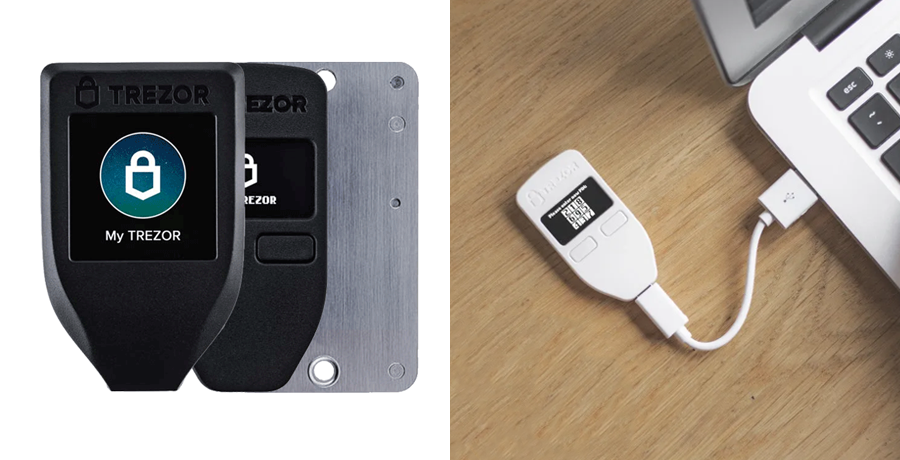
The Trezor One and Model T are legacy models now – still supported, but no longer the ones Trezor sells to new buyers. The current lineup is the Safe 3 ($79, monochrome screen, two-button navigation), Safe 5 ($169, color touchscreen, haptic feedback), and Safe 7 ($249, Bluetooth, battery, full iOS support, and – a first for a consumer hardware wallet – post-quantum cryptography). All three ship with a certified EAL6+ secure element, something the older Model One and Model T lacked, and all run fully open-source firmware that anyone can audit. Trezor supports both BIP39 and Shamir (SLIP39) backup formats.
- Safe 3 – the budget pick, best if you don’t need a touchscreen and mostly transact from a desktop.
- Safe 5 – the sweet spot for most people: same security as Safe 3, but touch input makes address verification much less painful.
- Safe 7 – for iPhone users or anyone who wants a cable-free workflow.
Keepkey
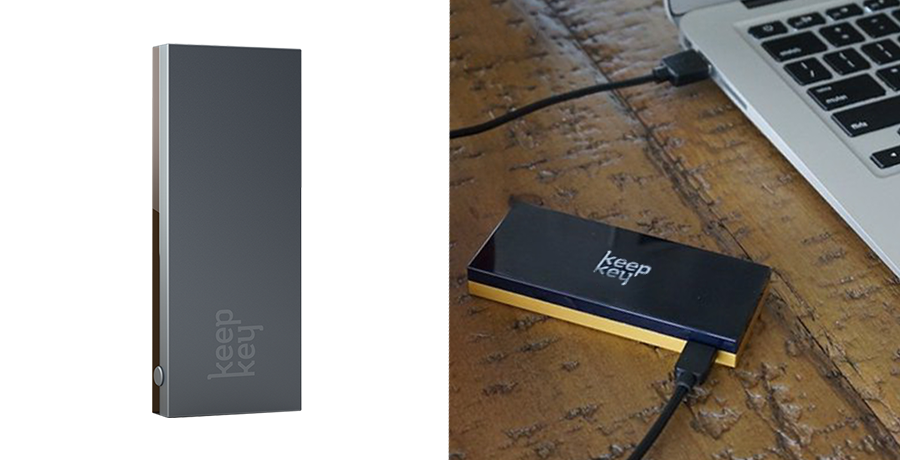
KeepKey is still around and still made by the team behind the ShapeShift exchange. It’s a no-frills, no-operating-system hardware wallet with the largest screen in its class (3.12″), which makes verifying a full address genuinely easier than on a Ledger or Trezor Safe 3. It no longer leads on asset coverage or features – no Bluetooth, no touchscreen – but for a straightforward desktop-based cold storage device it still does the job.
Coolwallet
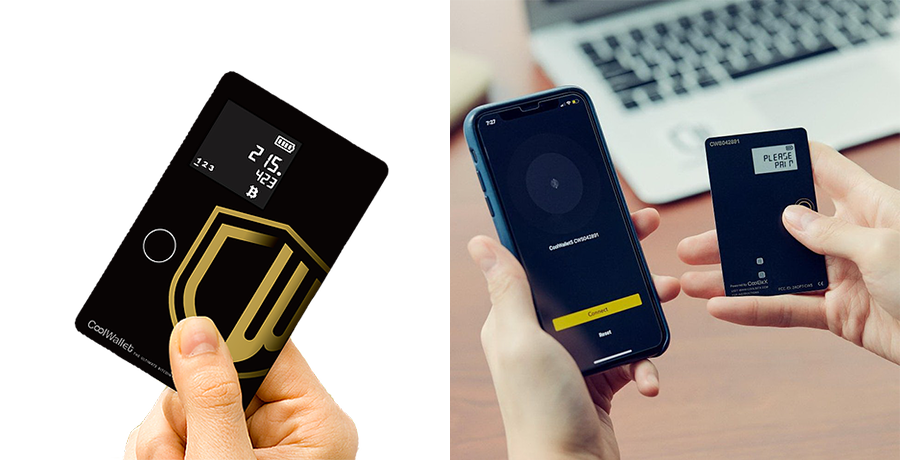
CoolWallet Pro is the current version of the credit-card-shaped hardware wallet – same idea as the 2019 original, upgraded hardware. It pairs over Bluetooth, runs an EAL6+ secure element, and signs transactions on-device while only encrypted results travel to your phone. CoolWallet says it hasn’t had a security breach since launching in 2014, which is a real point in its favor for a wallet in this price bracket.
Tangem

Tangem is a card-shaped, NFC-based hardware wallet with no screen, no battery, and – its main selling point – no seed phrase. Keys are generated and stored inside an EAL6+ certified chip, and instead of writing down 24 words, backup is done by tapping a second (or third) physical card to sync them as a matched set.
Mobile Bitcoin Wallets
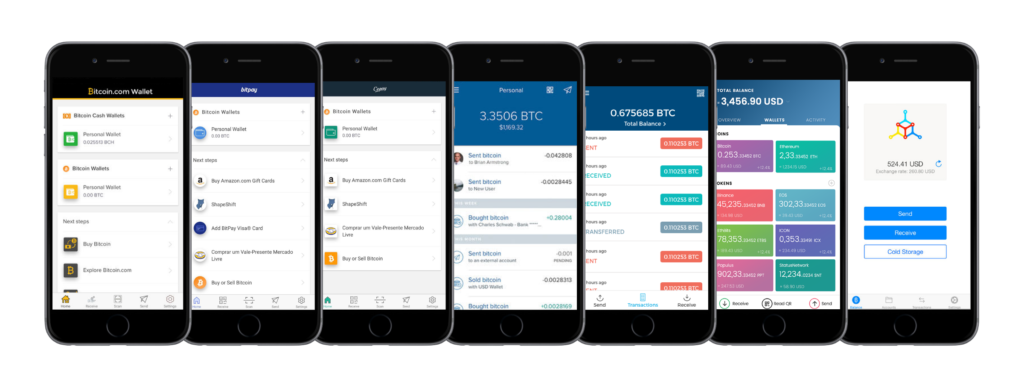
To make mobile wallets more trustworthy, you need to enable the two-factor authorization feature. Otherwise, if the smartphone is lost, the new owner can remove the coins.
Edge review
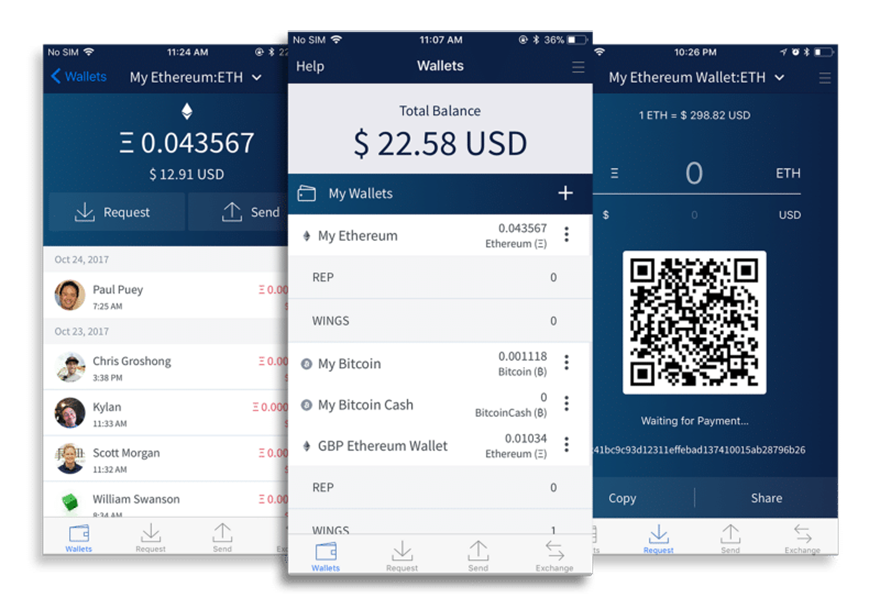
A reliable multi-currency wallet that is still beginner-friendly; has built-in fiat ramps and even a recovery question as a form of backup on top of the standard seed phrase.
Coinomi Review
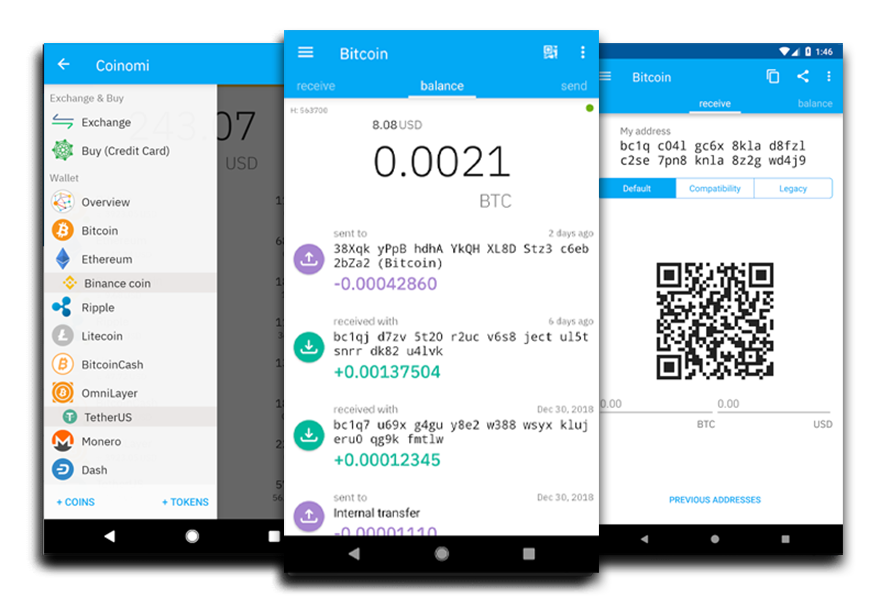
Coinomi is the choice when it comes to rare altcoins and privacy-oriented coins that newer wallets have stopped supporting over time, such as Monero and Zcash. With the emergence of new wallets like Rabby and Phantom targeting DeFi users, Coinomi still occupies its space for native assets support across all wallets through one seed phrase in 2026.
Trust Wallet
Trust Wallet is Binance’s non-custodial mobile wallet and one of the most widely used multi-chain wallets in 2026, with built-in DEX access, staking, and NFT support across dozens of networks. It’s closed-source, which some privacy-minded users will hold against it, but for a beginner-friendly, actively maintained mobile wallet it’s a reasonable default.
Desktop Bitcoin Wallets
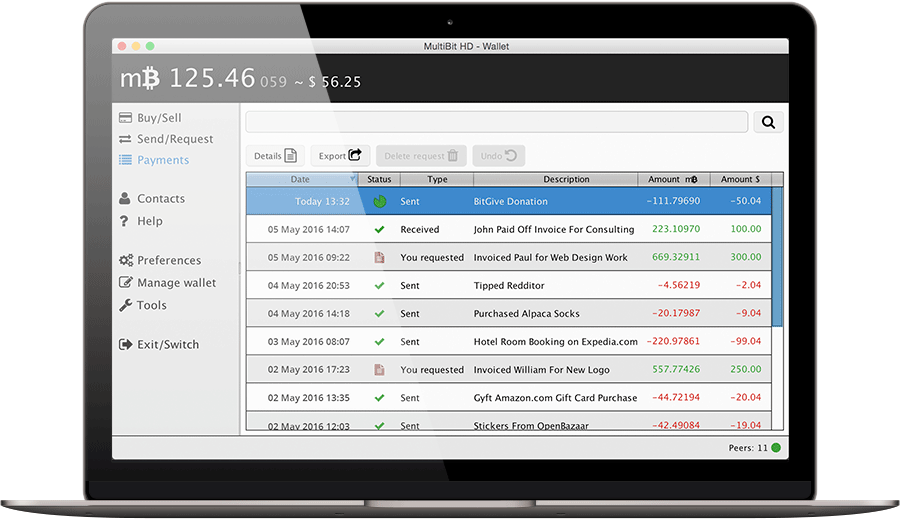
A distinctive feature of such wallets is that they can be installed on only one PC. The technology provides a high level of protection with a good antivirus program.
Exodus
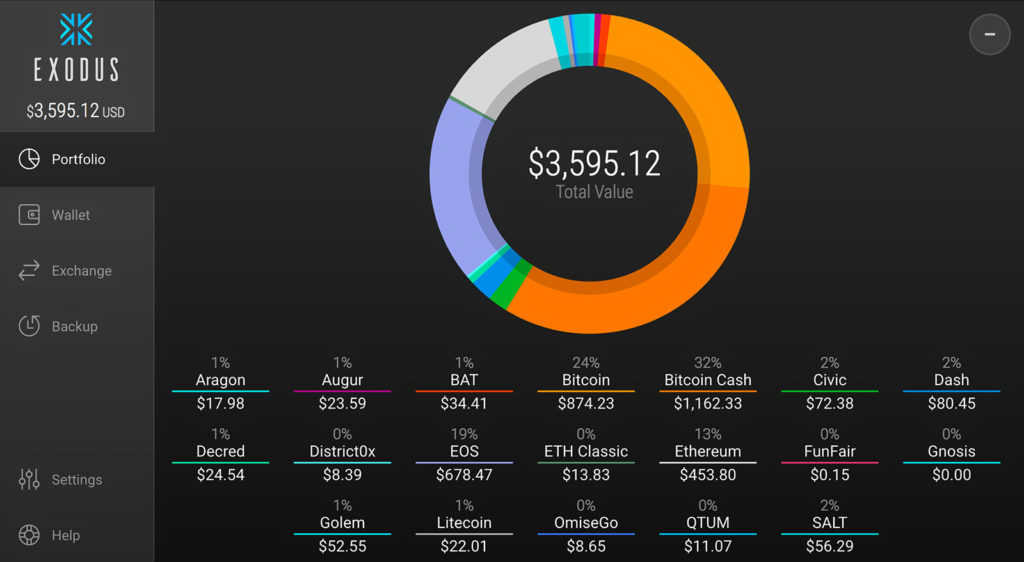
Exodus is still actively developed, still non-custodial, and now supports hardware wallet integration with both Trezor and Ledger – useful if you want Exodus’s interface with cold-storage-level key security. It’s partially open source, which puts it a step ahead of fully closed-source competitors on auditability, even if it’s not as transparent as Electrum.
Electrum
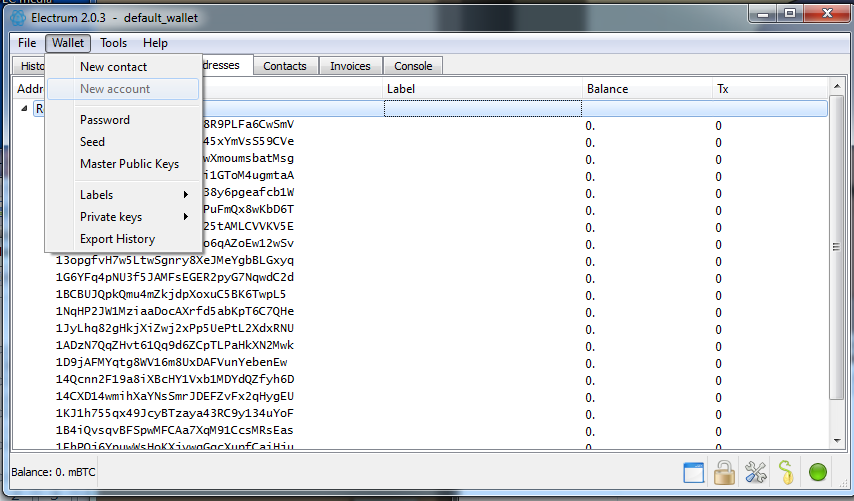
Electrum is still Bitcoin-only, still open source, and still one of the go-to choices for users who want multi-signature support without running a full node. It’s also one of the few wallets on this list that has been continuously maintained without a rebrand or ownership change since long before this article was first written.
Bitcoin core
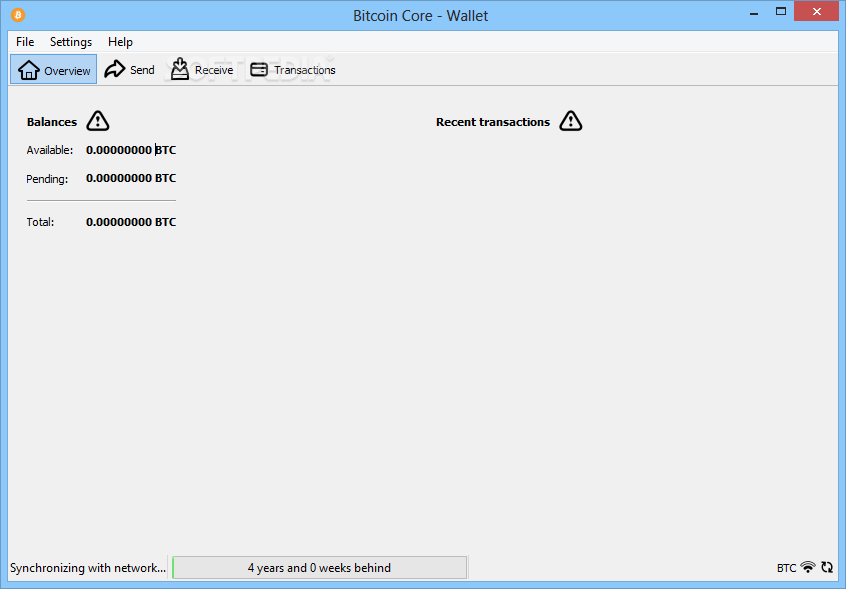
Still the reference client for Bitcoin itself. It downloads and validates the entire blockchain – well over 600 GB now – so initial sync can take days on a slow connection. Worth it if you actually want to run your own full node and validate the chain yourself; overkill if you want to hold Bitcoin.
Web bitcoin wallets
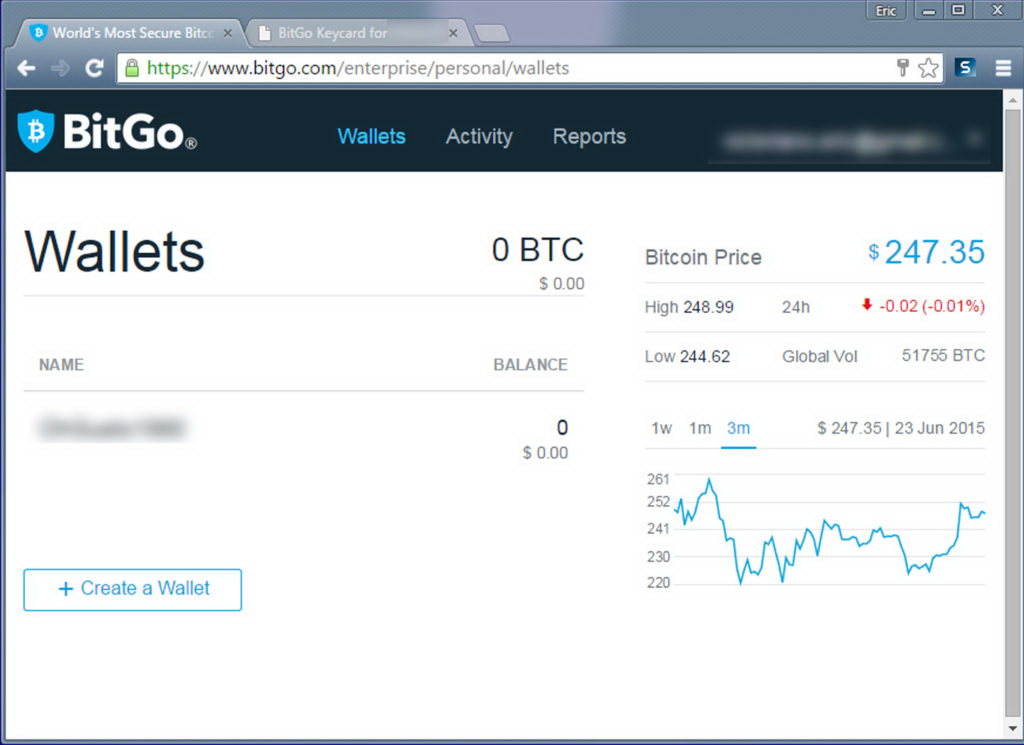
These are the most unprotected options in terms of pure self-custody, though the category itself has matured. BitGo has moved further into institutional multisig custody rather than a retail wallet. For everyday retail use, browser-extension wallets like MetaMask (EVM chains) remain the standard way most people interact with a wallet inside their browser – but the underlying trade-off hasn’t changed: any web-connected wallet is more exposed than hardware, so it’s best treated as a spending wallet, not a savings account. Withdraw anything you’re not actively using to hardware or offline storage.
Paper Bitcoin Wallets
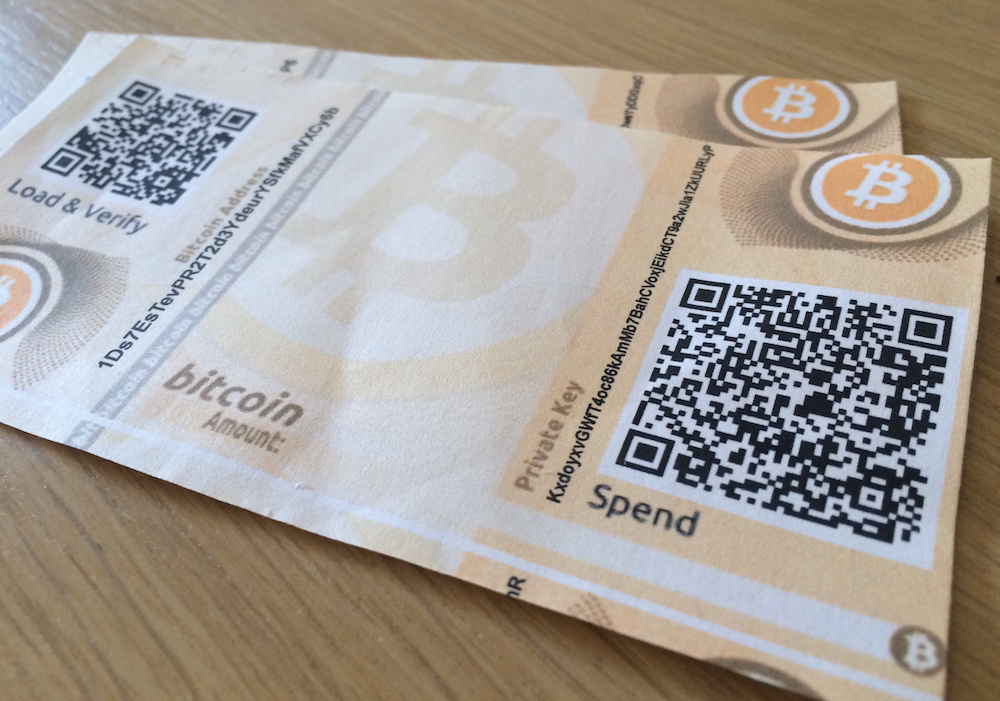
It can be individual sheets of waterproof paper or ordinary printouts on a printer. To commit any transaction with the currency, you must enter the private key on any Bitcoin wallet.
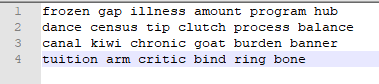
Also, it can be just a 12- or 24-word seed phrase which you can write on paper and put in a safe place — or, increasingly in 2026, stamp into a fireproof steel plate rather than paper, since a house fire or flood is a more common way to lose a seed phrase than a hack.
What to Look For in a Blockchain Wallet
Some wallets are equipped with the function of independently choosing the size of the commission for transactions. The SegWit protocol permits you to reduce payments if the transaction is not urgent. If the exchange needs to be completed quickly, the wallet owner independently increases the fee.
Backing up your keys
This feature permits you to regain a lost account. It is especially important for storing large amounts of money.
Two-factor authentication
All reliable wallets with a good reputation offer such a security system. It consists of requiring a PIN code before each transaction and notifications by:
- SMS
- Sometimes need to compare fingerprints.
Multi-signature support
If the funds belong to the team, then an unlock system with several signatures will come in handy. It can be configured in many ways. Sometimes 2 out of 3 signatures are enough, sometimes all are required. One signature can allow you to withdraw a particular part of the money.
Some words about coin/token exchanges
Such exchanges for storing your funds, such as Binance and Coinbase, have earned trust. They support Ethereum, Monero, and an extensive list of alternative cryptocurrencies, and are best for exchange. Among the drawbacks, clients must pay a fee for each trade. You also need to remember that the exchange is not a bank, so it’s safe to keep only a small amount.
Multicurrency vs. single currency
If a user wishes to trade in several currencies at once and collect a whole portfolio of coins, they do not need to open several separate wallets. Many brands and services now offer multicurrency models.
Final thoughts
The type of wallet should be chosen depending on the client’s needs. This takes into account the number of currencies used, the frequency of transactions, and the amount of money involved. No matter how trusted the wallet is, if the secret keys are lost or the coins are sent to the incorrect address, it will not be possible to recover the lost cash. And, as this update shows, it’s worth checking every year or two that the wallet you’re using is still actively maintained – three of the wallets originally recommended here quietly disappeared in the last four years.
wallet for dark web transactions ??????
really, u would think this is all about BTC Wallets…HUH
Very nice article! I begin to know more about Cryptocurrency Wallet
Thanks for sharing!